

Common Screw Types in Loss-in-weight Scales
Release time: 2025-05-12
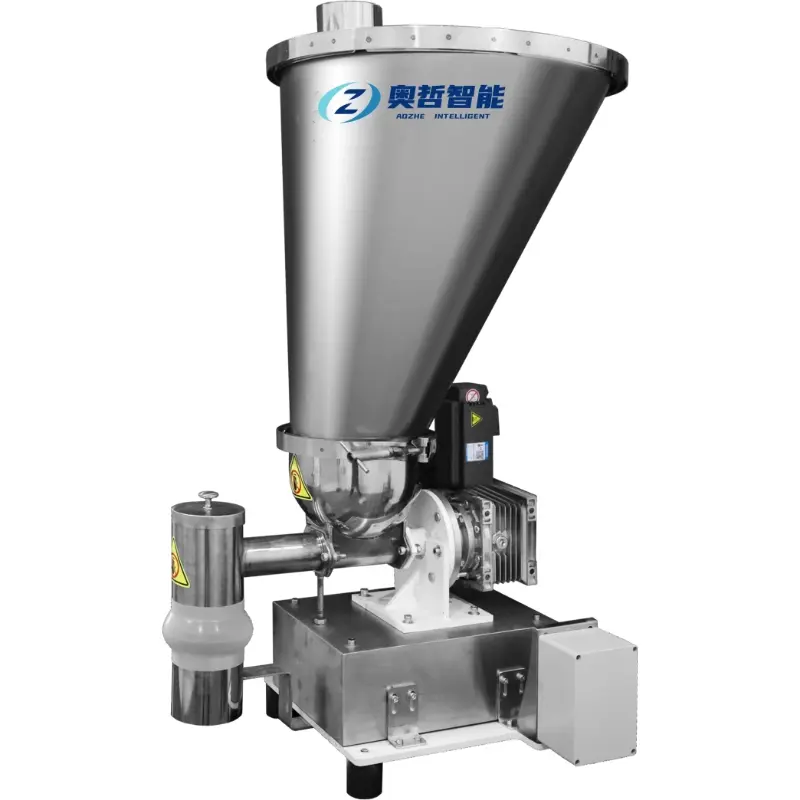
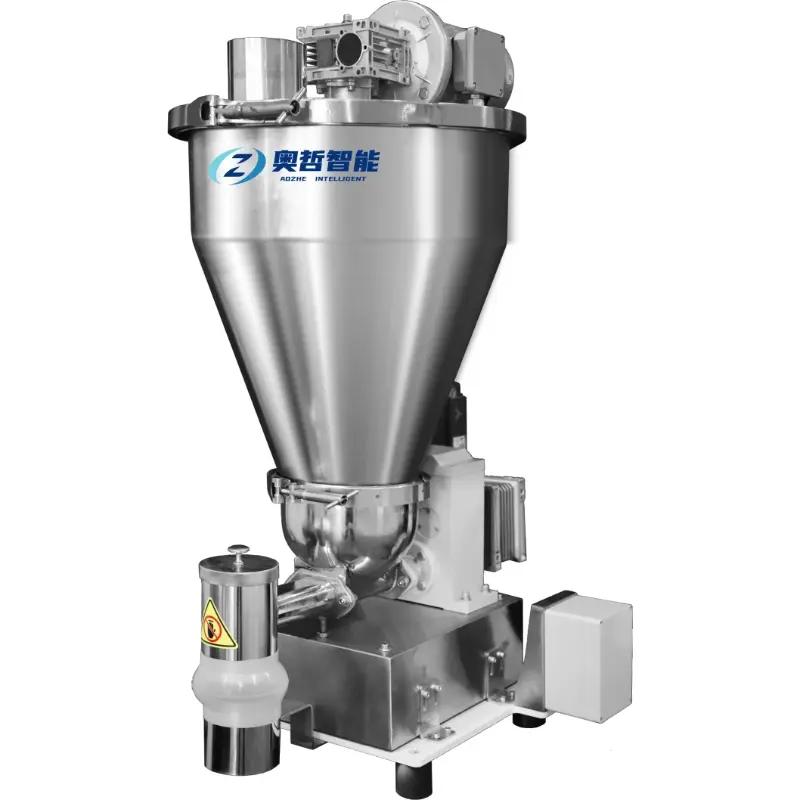
The types of screws commonly used in loss-in-weight feeder and their advantages and disadvantages are listed below:
1. Single screw
Structural characteristics: single screw blade rotates around the center axis, simple structure, suitable for most materials.
Advantages:
- Low cost: simple structure, low manufacturing and maintenance costs.
- Strong versatility: Single screw loss-in-weight feeder suitable for conveying powder, granular and other non-sticky materials e.g. plastic granules
- Easy to clean: easy to disassemble, suitable for scenarios that require frequent material replacement.
Disadvantages: - Easy to clog: poor adaptability to viscous or easily clumped materials (e.g. wet powder, clay).
- Precision limited: lower conveying uniformity may affect high precision weighing.
- Fast wear: hard or high friction materials may cause fast blade wear.


2. Twin Screw
Structural features: Two intermeshing screws rotate synchronously for more uniform conveying.
Advantages:
- High precision: Double screw loss-in-weight feeder stable conveying, suitable for scenarios requiring high flow control (e.g. food additives).
- Self-cleaning ability: meshing design reduces material residue, suitable for sticky materials (e.g. chocolate syrup).
- Good anti-clogging: suitable for materials that are prone to bridging or clumping.
Disadvantages: - High cost: complex structure, high manufacturing and maintenance cost.
- High energy consumption: dual drive may increase power consumption.
- Limited scope of application: for ultra-fine powder may cause leakage due to clearance problems.
3. Belt Screw
Structural Characteristics: Screw blades are banded and have a large gap with the pipe wall.
Advantages:
- Low shear: suitable for brittle materials that are easy to break (e.g. potato chips, puffed food).
- Anti-adhesion: reduces material adhesion, suitable for materials containing sugar or grease (e.g. candy, nuts).
Disadvantages: - Low conveying efficiency: suitable for low speed and low capacity scenarios.
- Easy to wear and tear: low strength of belt blades, easy to deform in long term use.
4. Hollow Screw
Structural features: the center of the screw is hollow structure, which can pass coolant or heating medium.
Advantages:
- Temperature control: suitable for heat-sensitive materials (e.g. resin, chocolate) or materials that need to be heated and melted.
- Anti-curing: avoids cooling and hardening of materials during transportation.
Disadvantages: - Complicated structure: requires matching temperature control system, high cost.
- Maintenance difficulty: high sealing and anti-leakage requirements.

Suggestions for selection:
- Powder/granular material: single screw or twin screw (according to precision requirements).
- Sticky/caking materials: Twin Screw
- Heat-sensitive materials: Hollow screw.
- Brittle/friable materials: Belt screw.
The actual application needs to be combined with the material characteristics, cost budget and maintenance conditions of a comprehensive choice for loss-in-weight feeders.